What If Your Anxiety Is Actually Anger?

Updated: Sep 12

For many people, anxiety becomes the dominant emotional experience in adulthood — the racing mind, the tightening chest, the spirals of worry, the fear of getting things wrong. But anxiety is often not the original emotion. Sometimes, it’s a replacement — an emotion that had to take over when something deeper once felt too risky to express.
That deeper emotion is often anger.
Anger is a protective force. It shows up when we are hurt, disrespected, or treated unfairly. It says: No. Stop. This matters. But if, as children, we learned — through punishment, shaming, silence, abandonment, or even subtle disapproval — that anger wasn’t safe, the nervous system adapted. It learned to hide anger to preserve connection and protect against loss. And the body, still trying to keep us safe, found a different outlet.
Sometimes that conditioning was cultural: “Good girls don’t get angry.” Or familial: “We don’t talk about feelings in this house.” Sometimes it was unspoken — a parent’s moods so unpredictable that any strong emotion felt dangerous. And for neurodivergent children, the rules for ‘acceptable’ expression might have felt even more unclear or out of reach.
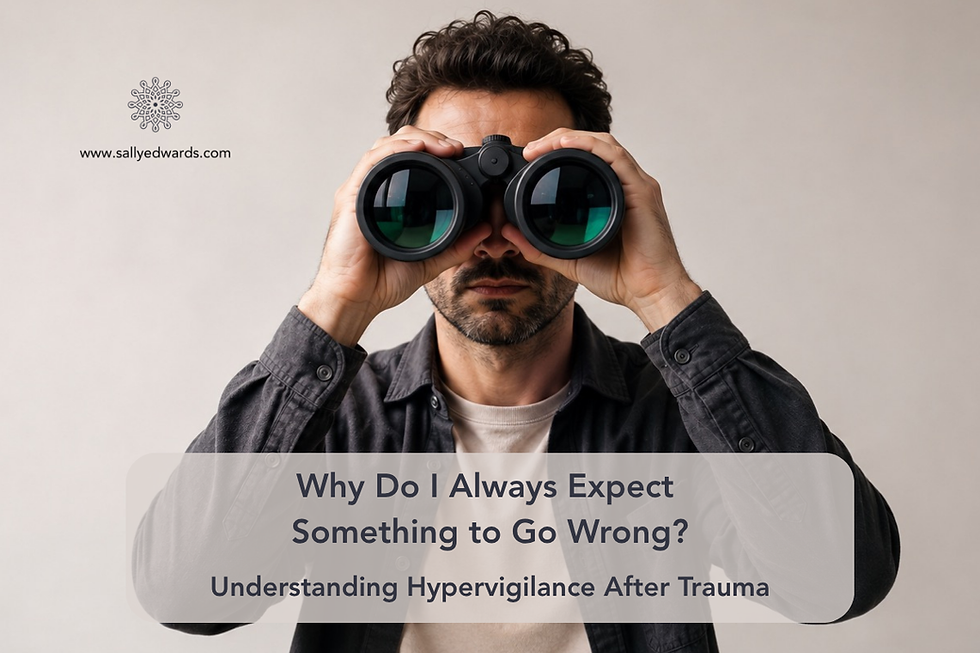
Instead of expressing anger, the system internalised the threat. It became hypervigilant, tense, braced for something bad. The fight response stayed active but had nowhere to go. Muscles tightened. The stomach knotted. The mind prepared for danger — even when danger wasn’t present. The body stayed ready for a conflict it was never allowed to have.
In this form, anxiety becomes a safer, quieter, more socially acceptable version of distress. No confrontation. No risk of upsetting anyone. You stay agreeable, careful, apologetic — because once, this kept you safe. And if you showed hurt instead of anger, you may have received comfort rather than consequences. Suppressing anger, at the time, was an act of wisdom.

Here’s a story that might resonate:
Ella’s Story
Ella was known for being “easy-going.” At work, she picked up the slack without complaint. With friends, she said yes even when she wanted to say no. On the surface, she seemed calm, dependable — the one who “never made a fuss.”
But her body told a different story.
Before social plans, her stomach clenched. After meetings, she replayed every word she’d said. She often woke at 3 a.m., heart pounding, convinced she’d upset someone — though she couldn’t pinpoint why.
In therapy, a question shifted everything:“What if the anxiety is protecting you from the consequences of anger?”
It landed hard.
Ella realised she had spent years biting back frustration — at being overlooked, taken for granted, or interrupted mid-sentence. The anxiety wasn’t random. It was her nervous system bracing against the belief: If I speak up, I’ll be abandoned.
She wasn’t just anxious. She was angry — and had never been allowed to say so.
Here’s the truth many of us never learned: Not all anger is destructive. Some anger is simply accurate.
Anger makes sense when boundaries have been crossed. It makes sense when you were treated unfairly. It makes sense when you were harmed, ignored, or blamed for things that were never your fault.
Your anger may still be holding the truth of those experiences — the truth that couldn’t be spoken then.
It’s not that the anger disappeared — it was postponed.
And the body remembers. The anger that never reached the surface remains coiled inside — unexpressed and unfinished. It may appear as headaches, digestive problems, IBS flare-ups, nausea, or tightness in the throat. It may show up as dread in the mornings, panic that seems to come out of nowhere, or fears that feel irrational because the body is responding to an old threat, not a present one.
Suppression was the strategy that once kept you safe — and now your physiology is gently insisting that something inside still requires protection, validation, and voice.
People who learned to silence anger often silence needs too. They become experts at scanning for others’ reactions, avoiding conflict, and taking responsibility for everyone’s comfort. On the outside, they look calm and capable. On the inside, their nervous system is still bracing — still believing that one wrong move could cost love or safety.
Anger turned inward becomes self-criticism. The anger that once wanted to say: This isn’t fair… I need more support… Why won’t anyone listen to me?… gets rerouted. Instead of being expressed outwardly, it becomes a voice that says: I’m the problem… I shouldn’t feel this… No one would stay if they knew the real me. Anxiety follows, because now your own emotional truth feels dangerous.
Healing this pattern isn’t about forcing anger to explode outward. It’s about helping the body learn, slowly and gently, that anger can exist without loss, punishment or rejection — and that some of your anger is not only valid but deeply deserved. It means giving yourself permission to feel anger about the things that were not okay. It means letting your nervous system update its story:
Anger doesn’t have to cost connection anymore. Anger can be an act of self-respect.
It begins with noticing: What boundary is this anxiety pointing to? What need is unmet? What part of me is quietly saying no?
And healing deepens in relationships where feelings — especially anger — can be expressed and still be met with care and connection.
Anger, when welcomed, becomes a compass. It helps us honour ourselves, speak up, and feel deserving of respect. When anger is safe to express, anxiety no longer has to be the first responder. The body can stop shouting through symptoms what the self is now allowed to say aloud:
That was not okay. I deserved better. I am allowed to feel this.
Your anxiety may be trying to protect what your anger once protected alone.
There is strength in that. There is wisdom. And there is a way back home.
How anger shows up as anxiety in the body
When fight energy is blocked, the body holds it:
• Chronic muscle tension (jaw, shoulders, fists clenching)
• Digestive issues (IBS, nausea, constipation, urgency, bloating)
• Tight chest, shallow breathing
• Racing heartbeat, dizziness
• Difficulty sleeping
• Restlessness or pacing
• Panic attacks when emotions rise
Anxiety becomes the body’s way of saying: “Something feels wrong — please listen.”
How anger shows up as anxiety in the mind
When your voice wasn’t safe, the mind tries to prevent anything risky:
• Catastrophising — assuming the worst
• Rumination — replaying conversations
• Perfectionism — trying to avoid criticism
• Fear of mistakes or disapproval
• Guilt for needing or wanting anything • Imagining future conflict before it happens
Your mind becomes the lookout — always preparing for impact.
How anger shows up as anxiety in relationships
If anger once cost connection, the system will protect connection at all costs:
• Avoiding conflict
• Saying yes when you want to say no
• Apologising too often
• Fear of being “too much”
• Tiptoeing around others’ moods
• Shrinking yourself to protect others’ comfort
This isn’t a flaw — it’s attachment survival.
Anger turned inward
When you can’t be angry at others, anger targets you instead:
“I’m the problem.”
“I can’t upset anyone.”
“I should be able to handle this.”
Self-criticism grows where protection once should have been. The anxiety that follows isn’t overreacting — it’s guarding your emotional safety.
Clues that anxiety may actually be anger underneath
✔ You feel anxious when someone is annoyed with you
✔ You avoid confrontation even when you’re hurt
✔ You get resentful but struggle to say why
✔ You overthink after conversations
✔ You feel like you’re “too emotional”
✔ You panic when you need to set a boundary
Anxiety signals: “This matters”
Anger knows: “Why”
How to help anger come back safely
Healing doesn’t mean forcing anger outward or becoming someone you’re not. It means helping your nervous system learn that anger can exist without losing love, safety, or connection.
Start with gentle curiosity and small experiments:
Notice and name what’s really happening
Often anxiety rises the moment anger is trying to surface.
You might ask:
• What is my anxiety protecting me from?
• What boundary might be crossed here?
• Is there a part of me saying “no” beneath this worry?
Even acknowledging: “There might be some anger here” is a powerful first step — it turns the light on inside the room.
Allow the body to express what the mind learned to silence
Anger is physical energy. It needs safe, contained movement.
Examples:
• Pushing your palms firmly into a wall
• Stomping feet into the ground
• Shaking out arms and legs
• Throwing a cushion onto a sofa
• Strong, purposeful walking
• Making sound (even into a pillow if needed)
• Gentle yoga
• Dancing or movement therapy
These help complete the fight response that was once interrupted — your body gets to “finish” something it never could before.
Practise tiny truths in real life
If confrontation feels scary, start with moments that feel low stakes:
Examples:
“No, thank you.”
“I’m not available right now.”
“That didn’t feel good to me.”
“I’d like something different.”
Every small act teaches your nervous system: I can express myself and still be safe.
Consistency matters more than courage.
Support the nervous system before, during and after
Anger often triggers old memories of danger. Calming the system gives your body evidence that this moment is different.
Try:
• Slow, deeper breathing: long exhales
• Grounding: noticing the floor beneath your feet
• Soothing touch: a hand to heart or belly
• Eating well and keeping hydrated
• Rest and physical comfort
• Looking around the room for safety cues
Regulation isn’t avoidance — it’s creating the conditions for expression.
Let safe people become part of the healing
Some wounds formed in relationships — and often they can only truly heal there too.
That might look like:
• Telling a friend you’re upset
• Sharing what you really need
• Expressing frustration with someone who cares
• Using therapy as a rehearsal space
When someone can stay present while you feel angry, your system learns a new story: Anger doesn’t destroy connection. Anger can deepen it. I can be real and still be loved.
Mark’s Story
Mark had always thought of himself as anxious. He avoided conflict, over-explained his choices, and apologised too often — even when he hadn’t done anything wrong. But beneath the surface, what he was really avoiding wasn’t mistakes — it was anger.
He felt it quietly, when a friend cancelled again, or when someone spoke over him in a meeting. His chest would tighten, his breath would catch — but he’d smile and say, “It’s fine.” At night, the anxiety would spike: racing thoughts, shallow breathing, worry he was “too sensitive.”
In therapy, he began to explore the possibility that the anxiety wasn’t random. It was the signal of something unsaid. One day, he found the courage to name it. “I feel angry that you keep cancelling,” he told his friend. His voice trembled — but the world didn’t fall apart. His friend didn’t leave. His body, for the first time in years, began to exhale.
It wasn’t just anxiety. It was anger that had finally found a way out.
Common worries
“What if I get carried away with anger?”
That fear is valid. But when anger is expressed slowly and safely, it doesn’t overwhelm — it empowers.
“What if I lose people?”
If expressing a need causes loss, the connection may not have been safe to begin with.
“What if I don’t know what I’m angry about?”
Start with sensation. Where does it sit in your body? What’s the first memory that comes to mind?
Reflection prompts
• When have I felt anxious after someone else seemed angry?
• What part of me believes anger will cost love?
• Where in my body do I feel tightness when I try to speak up?
• What small truth am I ready to express?
• If I could say one thing I’ve never said, what might it be?
A reframe to remember
Your anxiety is proof of how hard your system worked to protect you.
And now, something in you is ready for a new chapter — one where you don’t have to shrink yourself to feel safe.
Your anger remembers:
You matter.
Your boundaries matter.
Your needs matter.
Your voice matters.
You are allowed to feel what is true. And you do not have to carry any of it alone anymore.
If this feels overwhelming… Take a break. Drink some water. Ground yourself with your senses. Come back later if you need to. Or not at all. Healing doesn’t have to happen all at once.
In summary
When anxiety shows up, it is often carrying the weight of anger that once had no safe place to go. What was silenced for protection now rises through the body’s signals, urging us to acknowledge what was unfair, painful, or not okay. Healing is not about unleashing rage, but about gently reclaiming the right to feel — to recognise where boundaries were crossed and to allow anger to guide us toward self-respect, clarity, and connection. As anger finds its voice again, the nervous system no longer needs to shout through anxiety. You are allowed to feel what is true, and supported, your body can finally rest.