Why Do I Overthink Everything? Trauma, Anxiety and the Need to Feel in Control


You have a conversation with someone and, hours later, you're still thinking about it. Did you say too much? Did they seem irritated? Perhaps you should have explained yourself differently.
Or maybe you're trying to make a decision. You've researched the options, weighed up the advantages and disadvantages, and asked other people what they think. Yet somehow, you feel less certain than when you started.
You might rewrite a message several times before sending it, then worry about how it will be received. Or lie awake rehearsing conversations that haven't happened, imagining what could go wrong.
Overthinking can be exhausting, particularly when you recognise that you're doing it but can't seem to stop. And there's a frustrating paradox at its centre: the more you think in an attempt to feel certain, the more uncertain you can become.
That's because overthinking isn't always about finding the right answer. Sometimes, it's about finding the feeling of safety you imagine the right answer will provide.
Why Do I Overthink Everything?
Thinking things through is a normal, useful part of life. It helps us solve problems, make decisions and prepare for challenges. But there's a difference between productive thinking and becoming caught in repetitive thoughts that don't seem to lead anywhere.
Psychologists distinguish between two common patterns:
Rumination involves repeatedly revisiting things that have already happened. You might replay a conversation, dwell on a mistake or question why someone behaved in a particular way.
Worry tends to focus on the future, involving imagined difficulties, anticipated negative outcomes and mentally preparing for situations that haven't occurred.
Both can become forms of overthinking when they continue long after they've stopped providing useful information. Overthinking can also involve cognitive distortions, such as catastrophising or assuming we know what someone else is thinking, which can make situations feel more threatening than they really are.
Productive thinking moves you towards a decision, action or clearer understanding. Overthinking keeps you circling the same questions without reaching a satisfactory conclusion.
And while it may appear to be an intellectual process, it's often driven by something emotional: fear of making mistakes, being criticised, disappointing someone or feeling unprepared.
The problem you're trying to solve isn't necessarily the situation itself. It's the uncomfortable feeling the situation creates.
How Trauma and Early Experiences Can Make Overthinking Feel Necessary
For some people, overthinking develops in environments where being careful, anticipating problems or getting things right felt particularly important.
Perhaps you grew up with a parent whose reactions were unpredictable. Something acceptable one day might provoke anger or criticism the next. You learned to monitor moods, choose your words carefully and anticipate how someone might respond.
Or perhaps mistakes were met with shame or disappointment, making getting something wrong feel threatening to your sense of acceptance or belonging.
Some children learn that keeping others happy is their responsibility. Others discover that being exceptionally organised, responsible or successful helps them avoid conflict.
These experiences don't necessarily involve a single traumatic event. Sometimes, it's the repeated emotional atmosphere of a relationship that shapes how someone responds to uncertainty.
Imagine a child who regularly has to explain themselves to a highly critical parent. Before asking for something or admitting a mistake, they mentally rehearse what to say, anticipating objections and preparing explanations.
Years later, they're an adult who spends hours preparing for difficult conversations, even with people who have never treated them harshly.
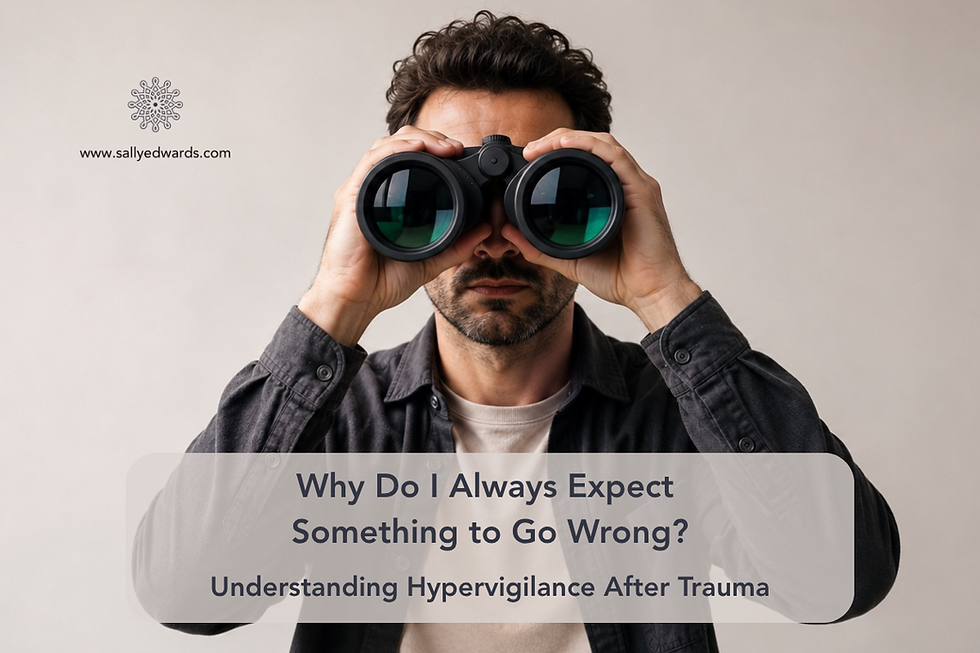
The circumstances have changed, but the familiar strategy remains. This can also be connected to hypervigilance, where past experiences can leave us particularly alert to potential problems, even when there's no immediate threat.
This is one possible way early experiences can shape overthinking, but people's experiences and responses vary considerably. Not everyone who grows up in a critical or unpredictable environment develops these patterns, and overthinking can emerge without any history of trauma.
Anxiety, perfectionism, temperament, current stress and learned family habits can all contribute. Sometimes, several influences combine, making it difficult to identify any single cause.
For those whose overthinking developed as a protective response, however, what looks like indecision today may once have been a way of avoiding consequences that genuinely mattered.
Why Overthinking Creates an Illusion of Control
One of the most important psychological processes underlying overthinking is our relationship with uncertainty.
Psychologists describe intolerance of uncertainty as a tendency to experience not knowing as particularly uncomfortable or threatening, even without clear evidence that something bad will happen.
When uncertainty creates anxiety, the mind looks for ways to reduce it. You might research every option, repeatedly review decisions, seek reassurance or mentally rehearse different scenarios.
For a while, this feels productive. You're doing something rather than sitting with the discomfort of not knowing.
But there's an important distinction between preparing for something and trying to guarantee an outcome.
You can prepare thoroughly for a job interview, but you cannot guarantee you'll be offered the position. You can think carefully about a decision, but you cannot eliminate the possibility of regret.
You can prepare for a conversation. You cannot prepare so thoroughly that you control how another person will respond.
Overthinking often involves trying to gain more control over a situation than is realistically possible, even when we've already done everything reasonably within our power.
And because complete certainty is rarely possible, there's always another possibility to consider or outcome to anticipate.
The mind keeps searching for reassurance that it may never be able to provide.

Overthinking can become a self-reinforcing pattern because it sometimes makes us feel better, at least temporarily.
The cycle illustrated above shows how an uncertain situation can trigger anxiety, leading to repeated analysis, mental rehearsal or reassurance-seeking. These behaviours may provide temporary relief, but when doubt returns, the process begins again.
This pattern persists partly because overthinking sometimes works. You might identify a genuine problem or reach a sensible decision, reinforcing the belief that more thinking is the answer whenever uncertainty arises.
But when analysis becomes your main way of managing anxiety, you may never discover that you can tolerate uncertainty without resolving it.
Over time, the strategy intended to make you feel safer can become one of the things keeping you anxious.
How Overthinking Shows Up in Everyday Life
Overthinking doesn't always look like obvious worry. Sometimes it appears as conscientiousness, thoroughness, sensitivity or a strong sense of responsibility.
In relationships, you might analyse someone's tone of voice, read between the lines of messages or replay disagreements. A brief reply or change in behaviour becomes something you feel compelled to understand. For some people, this overlaps with people-pleasing, where worrying about disappointing others can make even ordinary interactions feel emotionally complicated.
When making decisions, you may research extensively, compare every possibility and seek multiple opinions, only to find that each new perspective creates more doubt.
At work, overthinking can appear as perfectionism. You rewrite emails, prepare excessively for meetings or spend too long completing tasks because you're afraid of overlooking something.
Through self-criticism, you revisit mistakes, imagine what you should have done differently and struggle to let go of situations that cannot be changed.
Through reassurance-seeking, you repeatedly ask others whether you've made the right decision or whether someone might be upset with you. Their answers bring temporary relief, but doubt soon returns.
None of these behaviours is necessarily problematic in isolation. The difficulty arises when you no longer feel able to stop, even when continuing to think makes you feel worse.
The problem isn't necessarily the quality of your thinking. It's knowing when enough thinking is enough.
The Hidden Cost of Living Inside Your Head
Overthinking can consume enormous amounts of mental energy, interfere with sleep, affect relationships and make it difficult to enjoy the present.
But one of its less obvious consequences is the gradual erosion of confidence in your own judgement.
When you repeatedly question decisions or wait until you feel completely certain before acting, you may begin doubting your ability to make choices independently.
And the more you doubt yourself, the harder making decisions can become.
You may believe that considering every possibility will help you avoid mistakes. Sometimes it will. But it can also prevent you from developing confidence in your ability to cope when things don't go according to plan.
Self-trust doesn't develop only through making the right decisions. It also develops through making imperfect choices, managing disappointment, learning from mistakes and responding to unexpected situations.
When you continually try to eliminate uncertainty before acting, you have fewer opportunities to experience this.
In trying to protect yourself from getting things wrong, you may inadvertently lose confidence in your ability to handle them when they do.
Why Telling Yourself to 'Stop Overthinking' Doesn't Work
If you've tried to stop overthinking by telling yourself not to think about something, you'll probably know how ineffective that can be.
Deliberately suppressing unwanted thoughts can sometimes make them more persistent, because monitoring whether you're still thinking about something keeps your attention focused on it.
But there's another reason why telling yourself to stop rarely helps.
If overthinking has become a way of managing anxiety, removing the behaviour without addressing what drives it can feel uncomfortable or even unsafe.
Your mind may interpret the absence of analysis as a lack of preparation. What if you miss something important? What if something goes wrong because you didn't think it through?
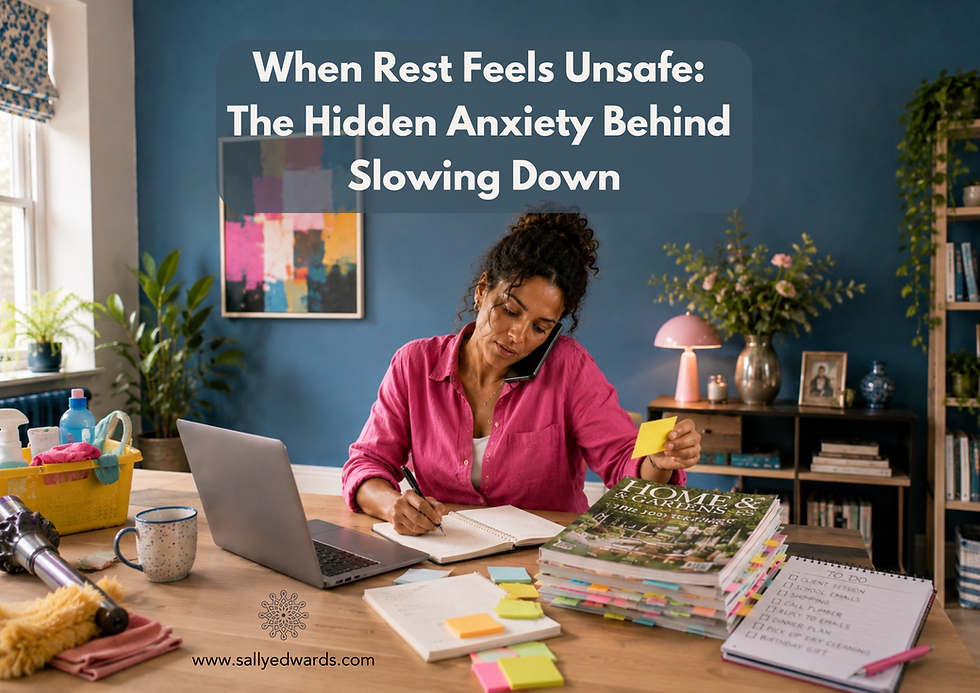
Part of you may recognise that the thinking isn't helping, while another part still believes that stopping would be irresponsible. This can also help explain why slowing down or resting can sometimes feel uncomfortable, even when you're mentally exhausted.
The aim isn't to eliminate unwanted thoughts or force your mind to become quiet. It's to develop a different relationship with those thoughts, so every doubt or possibility doesn't automatically become something you need to investigate.
Changing an established pattern of overthinking involves understanding what the thinking is doing for you, recognising when it stops being useful and gradually developing confidence in your ability to manage uncertainty.
Recognise What Your Overthinking Is Trying to Prevent
Rather than criticising yourself for overthinking, become curious about what you're afraid might happen if you stopped.
Are you worried about making a mistake, being criticised, disappointing someone or feeling rejected?
If you repeatedly rehearse conversations, for example, you might discover that you're particularly afraid of upsetting someone.
The underlying difficulty may not be knowing what to say, but feeling responsible for how another person reacts.
Understanding the emotional purpose of the behaviour creates an opportunity to respond differently.
Notice When Thinking Has Stopped Being Helpful
Ask yourself:
Am I solving a problem, or am I trying to make an uncomfortable feeling go away?
Notice whether you're discovering new information, reaching a conclusion or identifying something you can actually do.
If you're repeatedly reviewing the same possibilities without making progress, your thinking may have shifted from problem-solving into rumination or worry.
You can acknowledge that you've considered something sufficiently without needing to feel completely certain about it.
Learn to Tolerate Small Amounts of Uncertainty
Learning to tolerate uncertainty doesn't mean making reckless decisions or ignoring genuine concerns.
It means gradually allowing yourself to experience situations in which you don't have all the answers.
You might make a relatively unimportant decision without researching every option, send a message without repeatedly checking it or resist seeking reassurance when you already have enough information.
For example, imagine choosing a restaurant for an evening out. Normally, you might spend an hour comparing menus, reading reviews and worrying whether everyone will enjoy themselves.
Instead, you choose somewhere that looks suitable, make the booking and leave it there.
You may still wonder whether another restaurant would have been better. But rather than reopening the search, you allow yourself to experience that uncertainty.
Perhaps the evening goes well. Perhaps the food is disappointing. Either way, you discover that making a less-than-perfect choice is something you can manage.
Initially, these small changes may feel uncomfortable. You may experience an urge to reconsider or check again.
But allowing that discomfort to be present, without automatically responding through more thinking, creates an opportunity for a different experience.
You begin discovering that uncertainty can feel uncomfortable without necessarily being dangerous.
Address the Anxiety Beneath the Thinking
For some people, overthinking is connected to longstanding beliefs about responsibility, mistakes, rejection or personal safety.
You might believe that getting something wrong means you've failed, that other people's feelings are your responsibility or that being unprepared leaves you vulnerable.
Recognising the emotional and physical signs of anxiety can help. You might notice tense shoulders, a tight stomach, restlessness or an urge to keep checking something.
Rather than immediately thinking harder, you can begin acknowledging the anxiety itself and finding ways to regulate your response.
Therapy may also help when overthinking is persistent or distressing.
The aim isn't to become someone who never worries or doubts themselves. It's to develop greater flexibility, so thinking becomes something you use when it's helpful rather than something you feel compelled to do whenever life feels uncertain.
You Don't Have to Think Your Way Into Certainty
Imagine writing a message, reading it once and sending it.
The familiar questions appear. Was that the right thing to say? Should you have worded it differently? What if the other person misunderstands?
But instead of reopening the message and analysing it again, you allow those questions to remain unanswered.
You might still feel uncertain or anxious for a while. The difference is that you no longer automatically treat those feelings as evidence that something needs fixing.
This is often how change begins. Not with the disappearance of anxious thoughts, but with small experiences of responding to them differently.
Confidence isn't always about knowing what's going to happen. Sometimes it's about trusting that, whatever happens, you'll be able to find your way through it.
You don't have to think through every possible outcome to trust yourself to deal with the one that actually happens.
Free Guide: Why Do I Feel Like This?
A guide to understanding anxiety, overwhelm and why your nervous system can struggle to switch off. Click link to download: https://sallyedwards.com/#free-guide