Why Do I Feel Guilty When I Put Myself First? Trauma, People-Pleasing and Boundaries


You turn down an invitation because you're running on empty, then spend the evening rereading your message, wondering whether it sounded cold.
You finally keep a weekend clear for yourself, but can't quite enjoy it, because somewhere, someone might need you.
A colleague asks for a favour. You have every reason to say no — and hear yourself explaining, apologising, and then agreeing anyway.
You set a perfectly reasonable boundary. An hour later, the guilt is so loud you're drafting the message that takes it back.
You haven't done anything wrong. You know you haven't. And yet it feels as though you have.
That's the paradox at the heart of this post. You know you're entitled to rest, to say no, to have needs of your own — yet putting yourself first can feel like a small act of betrayal. As though someone is about to be let down, and it will be your fault.
For many people this isn't a passing discomfort. It's a familiar pattern, bound up with people-pleasing, early relationships and a deep sense of responsibility for how others feel. It can be so woven into your identity that it simply feels like who you are: thoughtful, reliable, the one who never makes a fuss.
But where does that guilt come from, and why can it be so difficult to shake?
Why does putting yourself first make you feel guilty?
Guilt has an important job. At its healthiest, it tells us we've acted against our values — been careless with someone, broken a promise, caused harm we'd want to put right. That kind of guilt points us back towards integrity.
But guilt isn't always that precise. Sometimes it fires not because we've done something wrong, but because we've done something unfamiliar. If your relational world was organised around other people's needs coming first, choosing differently can trigger the same internal alarm as genuine wrongdoing — even when nobody has been harmed.
It can help to think of this as conditioned guilt. Not a diagnosis, simply a description: guilt that has become associated with expressing or prioritising your own needs, rather than necessarily with causing harm. It doesn't ask, have I hurt someone? It asks, have I stepped outside the role I was expected to play?
Being considerate of someone's feelings is part of a healthy relationship. Feeling responsible for preventing them from ever experiencing disappointment is something quite different.
So when guilt arrives, one question can be clarifying: which of my values have I actually broken here? If you can name one, the guilt may have something worth hearing. If the answer is none — I've just said no, it may be an echo rather than a verdict.
Not everyone who struggles with boundaries has experienced trauma. Family expectations, cultural ideas about duty, gendered messages about caring and later relationships can all shape how much space we feel entitled to take. Understanding your own pattern matters more than assigning it a particular origin.
How childhood experiences can teach us that our needs come second
Children don't decide that their needs matter less. They learn it, gradually, from whatever seems to keep them close to the people they depend on.
Sometimes the learning comes through conditional approval. The child praised for being helpful, sensible, grown-up and no trouble absorbs that these qualities earn warmth. Being undemanding becomes part of being good.
Sometimes it comes through emotional unpredictability. When a parent's mood shifts without warning, a child learns to monitor it closely and avoid adding anything that might tip the balance. Their own wants are put on hold until the atmosphere feels safe enough.
Sometimes it comes through parentification, when a child takes on responsibilities beyond their years: looking after siblings, supporting a struggling parent, becoming the confidant or peacemaker. Other people's needs become their job, while their own begin to feel like a distraction.
And sometimes it comes through conflict or rejection. If disagreement or independence is met with anger, coldness or withdrawal, the child learns that asserting themselves has a price — and that the price is connection.
Imagine a boy whose mother is often overwhelmed. He learns to read her tiredness and step in before she asks — making his own breakfast, entertaining his little sister, never mentioning the school trip that would mean another bill. She tells people he's her rock, and he glows at it.
Years later he's the colleague who never turns down extra work, the friend who drives across town at midnight, the partner who genuinely doesn't mind where they go on holiday. He means it, mostly. But when he tries to protect a single evening for himself, something in his chest tightens, as though he's walked away from someone who needed him.
A child may learn to preserve connection by setting their own needs aside. As an adult, prioritising themselves can feel less like self-care and more like risking the relationship itself.
The guilt isn't really about the evening. It's about what the evening once meant.
When people-pleasing becomes a way of staying safe
People-pleasing is often described as wanting to be liked. Sometimes that's all it is. But for many people it runs deeper — less a preference than an automatic way of reducing conflict, disapproval or uncertainty.
You may have heard this described as fawning — a term used in trauma work to describe appeasing or accommodating others to reduce perceived threat. When fighting back might escalate a situation and leaving isn't possible, keeping the peace may become the safest option available.
This helps explain why people-pleasing can be so hard to reason your way out of. You might know that a colleague's disappointment is manageable or that a friend will be fine if you can't make it. But your nervous system may respond as though the relationship itself is threatened — a tightening in the throat, a drop in the stomach, an urgent pull to make things right.
As with hypervigilance, the body reacts to what it predicts, not simply to what's happening.
None of this means generosity is a symptom. Caring for others, helping and giving your time can be wonderful qualities. The question isn't whether you put others first. It's whether you're able to choose otherwise.
Generosity has both a yes and a no available to it. Compulsive accommodation only has a yes.
The People-Pleasing and Guilt Cycle
There's a reason this pattern can feel so stubborn: it reinforces itself.
Someone needs something — a request, an expectation, even the possibility of disappointment. Almost automatically, you feel responsible for meeting that need. So you say yes, give more than you comfortably can, or set aside something important to you.
Over time, the accommodation takes its toll. Exhaustion builds, resentment creeps in, and you recognise that something needs to change.
You decide to set a boundary. Perhaps you'll say no next time, take on less, or protect some time for yourself.
And then the guilt arrives.
You worry about disappointing someone, appearing selfish or damaging the relationship. The discomfort becomes so intense that you soften the boundary, apologise or abandon it altogether.
And it works, at least temporarily. The tension drops. Conflict seems to have been avoided. Relief arrives.
But relief teaches. What your system takes from that moment isn't I made a thoughtful decision. It's giving in made the bad feeling stop. Putting others first is reinforced as the safer option, and when the next request comes, the cycle runs again.
What gets lost each time you give in to ease the guilt is an opportunity to discover something important: that you might be able to tolerate another person's disappointment without abandoning yourself — and that the relationship might survive it too.

The hidden cost of always being the accommodating one
I've touched on exhaustion and resentment already. But the deeper costs of always accommodating tend to be quieter.
When you repeatedly set aside your preferences, they can become harder to hear. Ask someone who has spent years accommodating what they'd like to do this weekend, and there may be a long pause — not because they have no wishes, but because they've had so little practice consulting them. I don't mind begins as a kindness and slowly becomes the truth.
Resentment can be bewildering: how can you resent people for accepting help you freely offered? But it was never entirely free. Resentment can be the voice of needs that kept being overruled — a signal worth listening to rather than a character flaw.
Relationships can become lopsided, too. If you're always the one adapting, others may never learn what you need because you've never let them see it. Gradually, your life can begin to feel shaped by other people's requests rather than your own direction.
And there's a particular loneliness in being known as endlessly kind, dependable and easy-going while privately feeling trapped by those qualities. Everyone relies on you; few people think to ask how you are. You may fear that if you stopped accommodating, there would be nothing left that people valued — a fear that often accompanies the fear of being "too much."
But being needed and being valued aren't the same thing. Being needed depends on what you provide. Being valued includes who you are when you have nothing to give — and sometimes you only begin to discover the difference when you stop providing quite so much.
Why setting boundaries can make you feel worse before you feel better
Much of the advice about boundaries is well meant and oddly unhelpful. Just say no. Stop feeling guilty. Put yourself first. If it were that simple, you'd have done it long ago.
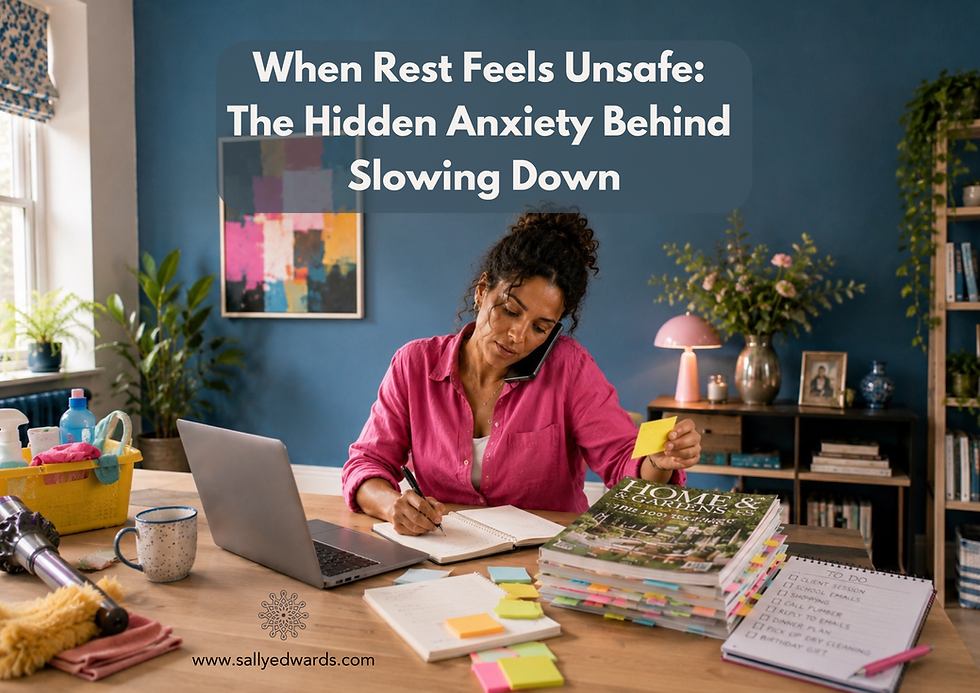
A boundary can be entirely appropriate and still feel threatening because it challenges something your system learned about keeping relationships safe. So when you finally hold one, you may not feel liberated. You may feel anxious, exposed, even slightly sick. The guilt might get louder before it gets quieter. This is similar to why rest itself can sometimes feel uncomfortable or unsafe, even when you're exhausted — something I explore in When Rest Feels Unsafe: The Hidden Anxiety Behind Slowing Down.
This is where it helps to distinguish doing something wrong from doing something differently. Both can feel uncomfortable. Only one necessarily involves causing harm. The discomfort of a new boundary may simply reflect stepping outside a familiar role — not evidence that you should step back inside it.
Sometimes people genuinely react badly to boundaries. Where unlimited accommodation has become the norm, a no may be met with irritation, sulking or pressure to change your mind. Your fear isn't always irrational; it may accurately reflect how certain people respond.
But another person's disappointment doesn't automatically make your boundary wrong. Sometimes their reaction reveals how much the relationship has come to depend on your accommodation — and that's important information.
How to begin putting yourself first without being overwhelmed by guilt
Change isn't about learning a script or becoming assertive overnight. It's about creating more internal choice — a little space between the impulse to say yes and what you actually do.
That begins with noticing. The of course, no problem can arrive before you've even registered the question. Simply catching it — there's the automatic yes — is a meaningful start. A phrase like let me check and come back to you can give you time to consider what you actually want.
You can also become curious about what the guilt predicts. What do I think will happen if I say no? Will they be hurt, angry, disappointed? Will they think less of me? Naming the prediction makes it something you can examine rather than something that quietly runs you.
It helps to recognise guilt as a feeling rather than an instruction. It can be present without being obeyed. As you have new experiences of setting boundaries, it may gradually lose some of its urgency.
Start with small, manageable moments rather than your most difficult relationship: stating a preference, declining something minor, leaving a non-urgent message until tomorrow. Allow the discomfort afterwards without rushing to undo it. Each experience offers an opportunity to discover that someone else's disappointment can sometimes be tolerated without immediately repairing it. People can disagree with your decision and still care about you.
Where guilt is rooted in earlier experiences in which having needs or asserting independence felt unsafe, therapy can help address the learning beneath the behaviour. Approaches such as EMDR, alongside work that attends to bodily responses and relational patterns, may help process those experiences and gradually change the emotional expectations carried into present-day relationships.
The aim isn't simply more assertive language. It's to change what your nervous system expects will happen when you include yourself.
You can care about others without abandoning yourself
A colleague asks for a favour. The familiar guilt arrives — the tightening, the pull towards yes, of course. But this time you notice it. You take a breath and give yourself a moment before answering.
You turn down an invitation. The worry still comes, but you let it sit beside you for the evening rather than letting it decide how the evening goes.
Perhaps you still say yes. Perhaps you say no. Perhaps you offer something in between. Whatever you decide, it's a decision — and that makes all the difference.
The goal isn't to become someone who never feels guilty or who always puts themselves first. It's to hold your own needs alongside other people's rather than automatically placing yourself last. To discover that you can be kind and still have limits; that you can disappoint someone and still be loved.
Caring because you choose to and caring because you feel you have no choice can look identical from the outside. From the inside, they could hardly be more different.